The "More Agents = More Value" is a Mistake

The vendor pitches have already started. I've seen three in the last two weeks alone.
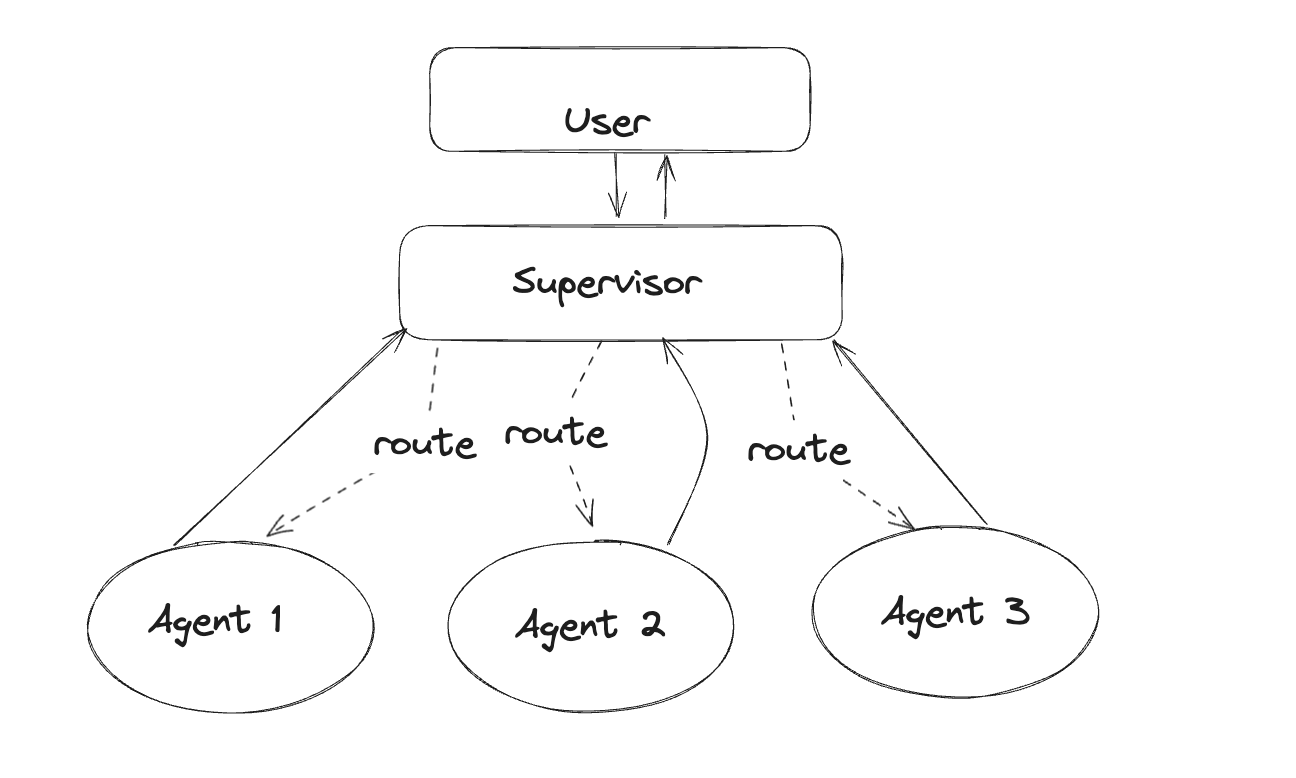
The pitch goes something like this. "Single agents are 2025 thinking. The future is orchestrated multi-agent systems where specialised agents collaborate to solve complex problems. Our platform makes it easy to deploy five, ten, fifty agents working together. The companies that move first will have a decisive advantage."
It's a compelling story. It's also wrong for most companies right now, in ways that are going to cost them real money over the next 18 months.
I want to be direct about this. Most companies should not be deploying multi-agent systems yet. Not because multi-agent architectures are bad. They aren't. Because the conditions under which multi-agent systems produce more value than single agents are narrower than the vendor pitch suggests, and the failure modes of premature multi-agent deployment are more expensive than most leaders realise.
Here's the argument, with the data behind it.
The number nobody is sitting with
Gartner reported a 1,445% surge in multi-agent system inquiries between Q1 2024 and Q2 2025. The framework ecosystem exploded. LangGraph, CrewAI, AutoGen, AgentCore, and a dozen others are competing for enterprise adoption.
The number that should follow this is the deployment number. Here it is.
Metric | Number |
|---|---|
YoY growth in multi-agent inquiries (Q1 2024 to Q2 2025) | 1,445% |
Enterprises with multi-agent systems deployed at full scale | 2% |
Gap between interest and deployment | ~72x |
That gap is the story. The hype is at 100. The reality is at 2. And the leaders making procurement decisions are mostly hearing the 100 number.
This isn't a temporary lag. Multi-agent systems are structurally harder to build, deploy, and govern than single agents. The 2% figure reflects how hard the work actually is, not how slow companies are.
The three problems vendors won't tell you about
Three specific failure modes that multi-agent systems introduce. Each one is real. Each one is consequential. None of them appear in vendor demos.
Problem | What it looks like in production |
|---|---|
Governance complexity multiplies | When five agents make autonomous decisions together, who owns the outcome? Traditional accountability frameworks break. |
Accountability gaps become structural | When something goes wrong, tracing which agent's decision caused the failure requires forensic work most teams can't do. |
Orchestration costs hide in the bill | Inter-agent communication, state management, and coordination overhead can exceed the cost of the agent calls themselves. |
Let me explain each one briefly because most coverage skips the operational reality.
Governance complexity. A single agent has a single owner, a single audit trail, a single set of policies. A five-agent system needs an orchestration layer that coordinates decisions across all five, governance policies for how they interact, and a way to evaluate whether the system as a whole is doing what it should. The complexity is not 5x. It's closer to 25x because the interactions matter more than the agents themselves.
Accountability gaps. When a customer gets a wrong answer from a single agent, you can trace it. When a customer gets a wrong answer from a system where Agent A passed context to Agent B which queried Agent C which returned a hallucination that Agent D acted on, the post-mortem takes days. Most organisations don't have the forensic capability to even diagnose what went wrong, let alone fix it.
Orchestration costs. Vendor pitches focus on the per-agent pricing. The real cost is in the coordination. Inter-agent messages, state synchronisation, retry logic, and conflict resolution. In production deployments I've watched, orchestration overhead has run 30-60% of total system cost. That number does not appear in any procurement deck.
When multi-agent is actually right
I'm not arguing multi-agent systems are wrong. They're right for specific situations, and those situations are narrower than the vendor pitch suggests.
Signal that multi-agent is justified | Why |
|---|---|
Genuinely specialised domain expertise required | One agent can't be both an expert legal reviewer and an expert financial analyst |
Parallel work streams that would block a single agent | Five customer queries arriving simultaneously, each needing different reasoning |
Failure tolerance through redundancy is critical | One agent can review another's work and catch errors |
The workflow is genuinely too complex for one context window | The problem genuinely doesn't fit in a single agent's reasoning |
If you can answer "yes" to two or more of those signals, multi-agent might be the right architecture. If you can't, you're probably building complexity for its own sake.
When a single agent is enough (which is most cases)
The much more common situation. You have a workflow that's complicated but not specialised. You have decisions that need to be made in sequence, not in parallel. You have one team that owns the outcome.
Signal that single agent is enough | Why |
|---|---|
Workflow has clear sequential steps | A single agent with good planning can handle it |
One domain of expertise is required | No specialisation benefit from multi-agent |
You don't yet have a working single-agent version | You haven't earned the right to add complexity |
Your team can't fully explain what each agent would do | If you can't write the job description, don't hire it |
The last signal is the one most teams skip. Multi-agent systems require each agent to have a clear, defensible reason to exist. If you can't articulate the role with the same clarity you'd use for a human hire, the agent shouldn't be in the system.
The mistake pattern I'm watching unfold
Here's what I'm seeing in conversations with leaders considering multi-agent deployments. The mistake is structured, predictable, and avoidable.
Phase 1: Vendor pitch creates urgency. The pitch emphasises competitive risk. "Your competitors are doing this. You need to move now or fall behind."
Phase 2: Leadership signs off on multi-agent before single agent is working. The procurement decision gets made on the premise that multi-agent is the destination, so why not skip the intermediate step.
Phase 3: Six months in, the system is half-working and expensive. Governance gaps appear. Accountability is unclear. Orchestration costs are higher than projected. The team is debugging interactions rather than improving outcomes.
Phase 4: The system gets quietly scaled back. Most multi-agent systems that fail don't fail loudly. They get reduced to one or two agents doing what a single well-designed agent could have done from the start. The lesson the organisation takes away is "AI is harder than expected," not "we should have started simpler."
I've watched this pattern enough times to recognise it. The companies that win aren't the ones who deploy the most agents. They're the ones who deploy one agent well, prove value, and only add complexity when the single-agent system genuinely hits its limits.
How to think about this
Three principles for any leader weighing a multi-agent deployment.
Principle | Why it matters |
|---|---|
Earn the right to add complexity | If you don't have a single agent producing measurable value yet, multi-agent is premature |
Stress-test vendor pitches against the four "multi-agent is justified" signals | If fewer than two apply to your situation, push back hard |
Demand orchestration cost projections, not just per-agent pricing | The hidden cost is in coordination, not in the agents themselves |
The first principle is the most important. If you don't have a single agent in production producing measurable value, you are not ready for multi-agent. The complexity will overwhelm you. The benefits will not materialise. The vendor will be paid. You will be debugging.
The second principle is where most procurement decisions go wrong. Vendor narratives are designed to obscure how narrow the right-use-case is. Holding the pitch against four specific signals forces honesty into the conversation.
The third principle protects your budget. Orchestration overhead is the silent cost line. Asking for projected orchestration cost as a percentage of total system cost is the question most procurement teams forget to ask. The answer will tell you whether the vendor has done this before or is hoping you won't.
The bottom line
Multi-agent systems are a real architectural pattern with real applications. They are also, right now, being oversold to organisations that aren't ready for them and don't need them.
The "more agents = more value" pitch is going to be the dominant AI vendor narrative of 2026. Most companies are going to nod, sign the procurement, and discover the costs the hard way.
The companies that win the next 18 months won't be the ones with the most agents. They'll be the ones who deployed one agent well, learned what it could and couldn't do, and added complexity only when the simple version genuinely failed.
Single agent is enough for most workflows. Multi-agent is the right answer for a narrow set of genuinely specialised, parallel, failure-tolerant problems. The vendor pitch will tell you the second case is everywhere. It isn't. It's the exception, not the rule.
Build the simple thing well first. The complex thing comes later, if at all.