Claude Design Isn't a Figma Killer. It's Something More Interesting for Leaders Who Don't Design.

The 7% tell
On the afternoon of April 17, 2026, Anthropic shipped Claude Design. By market close, Figma's stock had fallen about 7%. Adobe slipped too. The coverage that followed was almost uniformly framed as "Figma Killer," which is the laziest possible read of what actually happened.
The Figma-killer story is the wrong one. The right one matters if you're a founder, CEO, or operator trying to figure out whether this tool changes anything for you.
What actually shipped
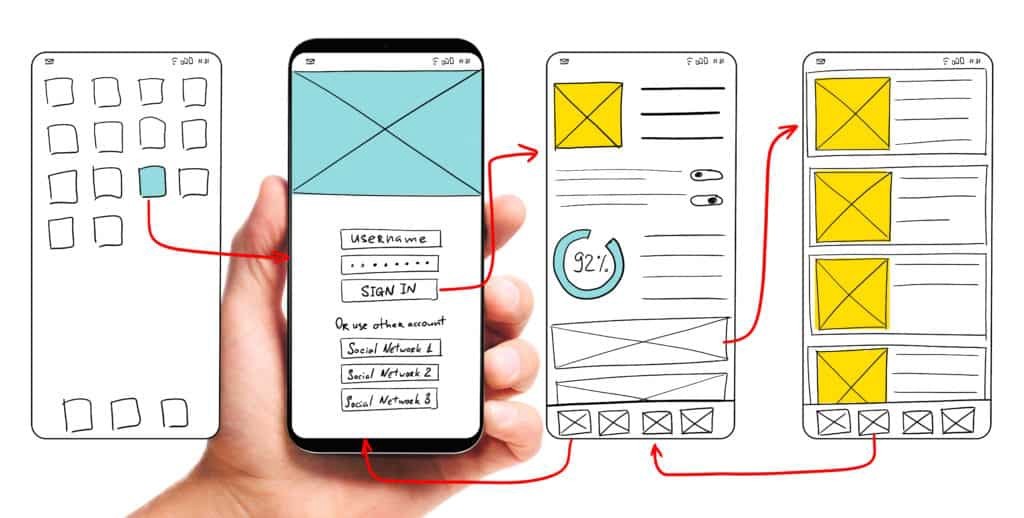
Claude Design is a new product inside Claude, powered by the just-released Opus 4.7 model. You describe what you want in plain English — a pitch deck, a mobile app prototype, a landing page, a one-pager — and it produces a first version. You refine through conversation, inline edits, and custom sliders. The output isn't a static image; it's live, interactive HTML you can click through and test.
The feature that most coverage glossed over is the one that matters most. Claude Design can read your codebase and Figma files, extract your design system, and apply it automatically to every project that follows. When your marketing team generates a pitch deck tomorrow, it comes out on-brand — without anyone having to specify your colours, typography, or components.
It exports to PDF, PowerPoint, HTML, or Canva, and hands designs off to Claude Code for production builds. Currently a research preview for Pro, Max, Team, and Enterprise subscribers at no additional cost.
Why "Figma killer" is the wrong frame
Figma is not dying, and Claude Design is not trying to kill it. The people who use Figma professionally — product designers managing design tokens, running design reviews, collaborating in real time on complex systems — will still use Figma. Claude Design doesn't replace that workflow.
What Claude Design does is fill a different gap. The gap between "I have an idea" and "I have something visual enough to share with someone who isn't me."
For design-led companies, that gap is owned by a designer. The designer takes the brief, produces a mockup, iterates, hands off to engineering. That loop works when you have designers and budget and time. Most businesses do not. Most businesses have a founder with an idea, a sales lead with a proposal to make, a PM with a feature to explain, a marketing lead with a landing page to launch — and no design capacity to spare. The options historically have been: hire freelancers, use templates, push it back on the nearest designer, or ship something ugly.
Claude Design gives that person a genuinely new option. That's who the tool is for. Calling it a Figma killer misses the point because it compares the tool to the wrong incumbent. The incumbent Claude Design is actually disrupting isn't Figma. It's PowerPoint, Canva templates, and the freelance designer you hire for one-off decks.
What this means for leaders who don't design
I've been thinking about Claude Design specifically through the lens of leaders who hire me — founders, heads of operations, senior operators at SMBs. Almost none have a design team. Most have spent real money on design they weren't happy with. And almost all have a monthly moment where they need to communicate something visual and either do a bad job themselves or pay too much for someone else to do it passably.
For that audience, three things about Claude Design are genuinely new.
The brand system is automatic. Most "AI design" tools before this produced generic output that looked like every other AI-generated asset. Claude Design reads your existing codebase or Figma files and extracts your actual brand — colours, typography, spacing, component patterns. Every project that follows inherits that. Output is on-brand by default, not "close enough if you squint."
The output is interactive, not static. When your head of sales builds a pitch deck, it's not slides — it's a clickable prototype your client can explore. When your product lead mocks up a feature, it's a testable interactive, not a dead image. You stop debating what the thing might feel like, because you can just use it.
The handoff path is real. Claude Design outputs can be handed directly to Claude Code to be built as software. For a non-technical founder, this closes a loop that used to require a designer-to-developer translation. The caveat: the "working version" still needs real engineering work to hold up in production, but the starting point is dramatically closer than it used to be.
Where it breaks
Taste is still scarce. The most common failure mode I expect is the same as every democratised design tool: people without taste now produce more of it, faster. Tools don't give you taste. They give you throughput. The right move is to use it inside a constraint — your existing brand system, a reference you admire, an explicit instruction for restraint.
Research preview means rough edges. This launched three days ago as I write this. The coverage is enthusiastic, and the marquee demos are real, but the product will have bugs and limits that aren't documented. Don't bet a client deadline on it yet.
The "Figma-to-production" pipe still requires engineering judgement. A clickable prototype that looks like an app is not the same as an app that handles edge cases, scales under load, and meets accessibility standards. Plan for the full distance, not the first ten yards.
A practical use case map
If I were advising a small business in Halifax tomorrow on where to deploy Claude Design first:
High ROI, low risk: Internal pitch decks, proposal decks for clients, one-pagers for partnership conversations, mockups for internal alignment, visual aids for workshops. Work-product gaps where non-designers are already producing mediocre output.
Medium ROI, medium risk: Landing pages for new campaigns, externally-distributed marketing one-pagers, prototype walkthroughs shared with prospects. Still benefit from speed and on-brand output, but customer-facing so the polish bar is higher.
Lower ROI, higher risk: Production customer-facing surfaces, anything regulated (financial disclosures, healthcare), accessibility-critical work. Use Claude Design here to explore options, but plan for proper design and engineering review before anything ships.
What I'd do this week
Pick one upcoming internal deliverable — a board slide, a partnership pitch, an internal memo with visuals — and commit to producing it in Claude Design instead of PowerPoint or Canva. Give yourself an hour.
At the end of the hour, three questions. Was the output better than what you'd have produced in the same time using your usual tools? Would you be willing to share it externally with a client without feeling embarrassed? What was harder than expected, and what was easier?
Those three answers tell you everything you need to know. Not the demo on Anthropic's blog. Your own hour of real use.
The deeper thing
The tools that win with AI right now are not the ones that try to replace the specialist. They are the ones that empower the person who wasn't going to hire the specialist anyway.
Figma users were not going to abandon Figma for Claude Design. That was never the market. The market was the millions of founders, operators, and non-design professionals producing ugly PowerPoints, mediocre Canva outputs, and stock-photo landing pages because they had no better option.
For leaders who don't design, the question isn't whether Claude Design threatens Figma. The question is whether it finally gives you a way to communicate visually at the speed and quality your business actually needs — without either paying a designer rate or shipping something you're quietly embarrassed by.
For a surprisingly wide range of use cases, the answer is yes.
Nabeel Ansar consults with founders and senior operators on AI adoption, governance, and product strategy. He writes from Halifax, Nova Scotia.
If this resonated: Download The Claude + Copilot Stack for Non-Engineers — the playbook I use with clients, including use-case maps, rollout sequencing, and the governance one-pager. [Link to gated download.]